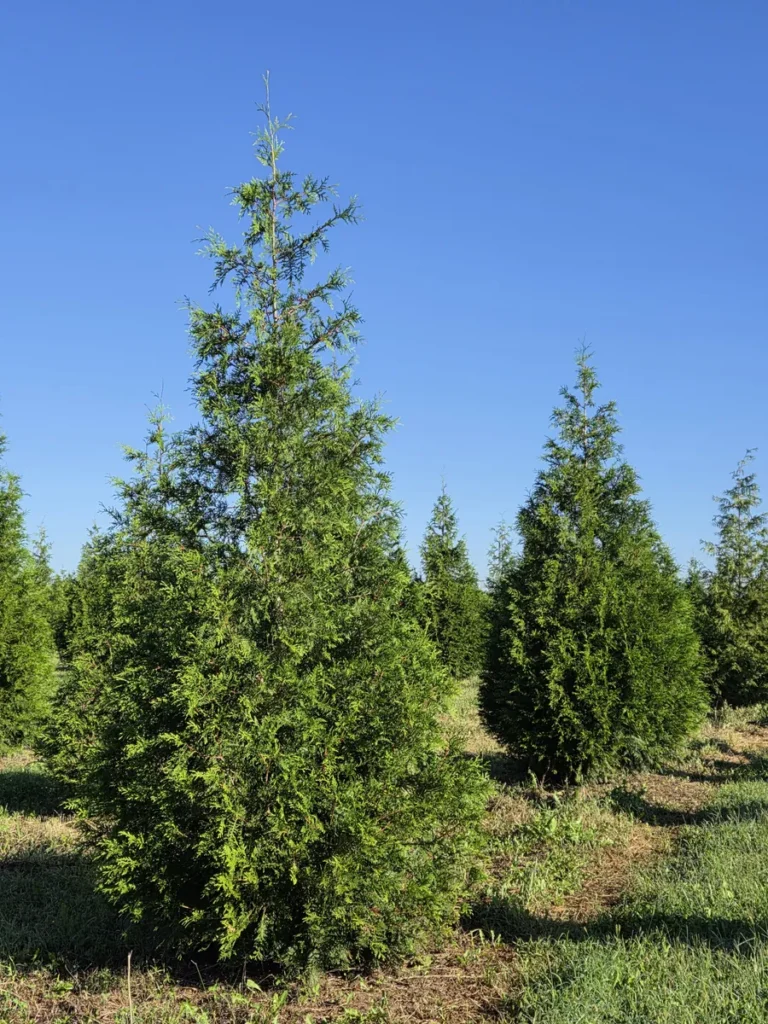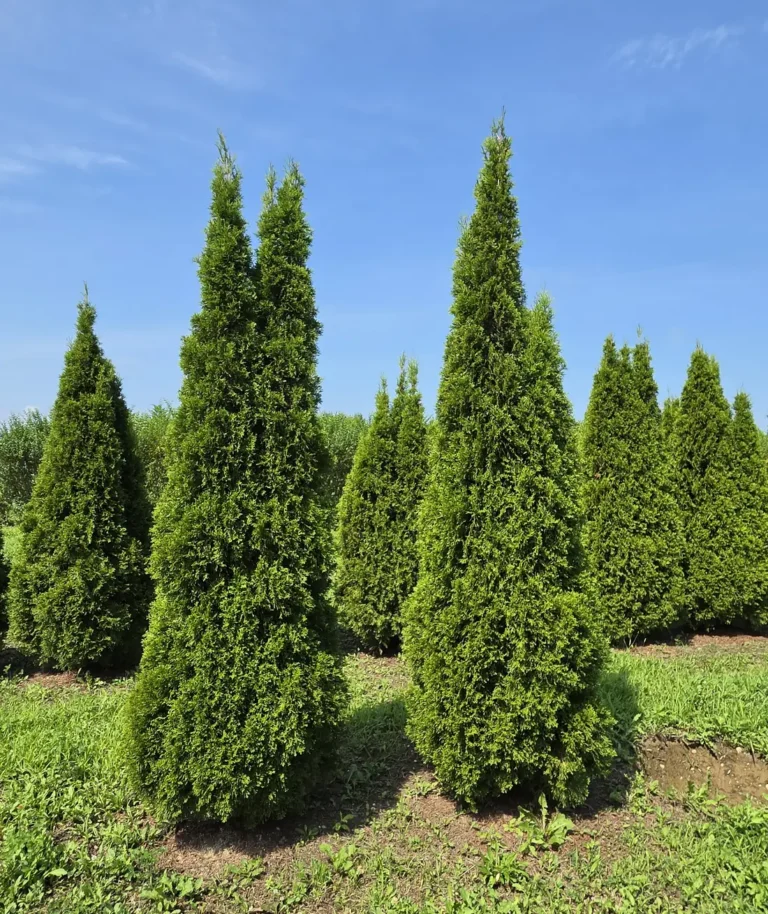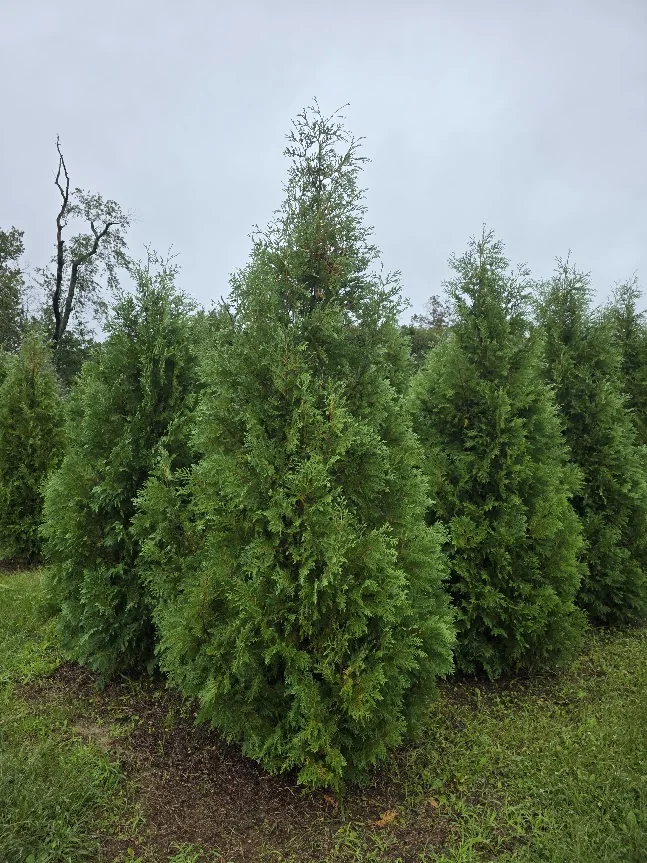
American Arborvitae at a Glance
| Botanical name | Thuja occidentalis (also called Eastern or Northern White Cedar) |
| Category | Native evergreen privacy and screening tree |
| USDA hardiness zones | 2 to 7 (all of New Jersey) |
| Sun exposure | Full sun to part shade |
| Growth rate | Medium: 12 to 18 inches per year |
| Mature size | 25 to 40 ft tall, 10 to 15 ft wide, broad pyramidal form |
| Foliage | Medium green, flat sprays; may bronze slightly in winter |
| Soil | Adaptable; tolerates wet, clay and limestone soils |
| Sizes available | 5 to 8 ft, balled and burlapped (confirm current stock) |
| Recommended uses | Tall privacy screens, windbreaks, wet-site screening, naturalized and native plantings, municipal buffers |
Why Contractors Choose American Arborvitae
- Native to the Northeast, so it qualifies for native-plant specifications, buffer requirements and municipal landscape ordinances.
- Tolerates wet and clay soil better than Green Giant or Leyland Cypress, making it the screening tree for low, damp property lines.
- Extremely cold hardy (zone 2) and long lived; mature plantings last for decades.
- Broader and taller than Emerald Green, so fewer plants are needed per foot of screen.
- Economical choice for large-scale buffers, farm windbreaks and commercial perimeters.
Growing Notes
Plant American Arborvitae in full sun to part shade in moist soil; it is one of the few evergreens that thrives where the ground stays damp. Space 5 to 6 ft on center for a screen or 8 to 10 ft for a windbreak row. Water regularly through the first two seasons. Foliage may bronze in cold winters and greens up again in spring, which is normal. Deer browse this species heavily in winter, so plan on repellent, fencing or a burlap wrap in deer-heavy areas for the first few years. Pruning is optional; shear lightly in early summer if a formal hedge is wanted.
Frequently Asked Questions
American Arborvitae grows at a medium rate, typically 12 to 18 inches a year once established. It is slower than Green Giant but broader and more tolerant of wet ground.
Yes. Thuja occidentalis is native to the northeastern United States, including northern New Jersey, and is accepted on most native-plant and municipal buffer lists in the state.
Yes. It is one of the most wet-tolerant evergreens available and grows naturally in swamps and along streams. It is the arborvitae we recommend for damp, clay or poorly drained screening sites.
Plant 5 to 6 ft on center for a privacy screen or 8 to 10 ft apart for a windbreak row. Its mature width of 10 to 15 ft means it needs more room than Emerald Green or Steeplechase.
Yes. We grow American Arborvitae on our farm in Cranbury, NJ and supply landscape contractors, garden centers and municipalities across New Jersey, New York, Pennsylvania and Connecticut. Send your quantities and sizes through the quote form and we will confirm availability and contractor pricing, with delivery available.