Honey Locust at a Glance
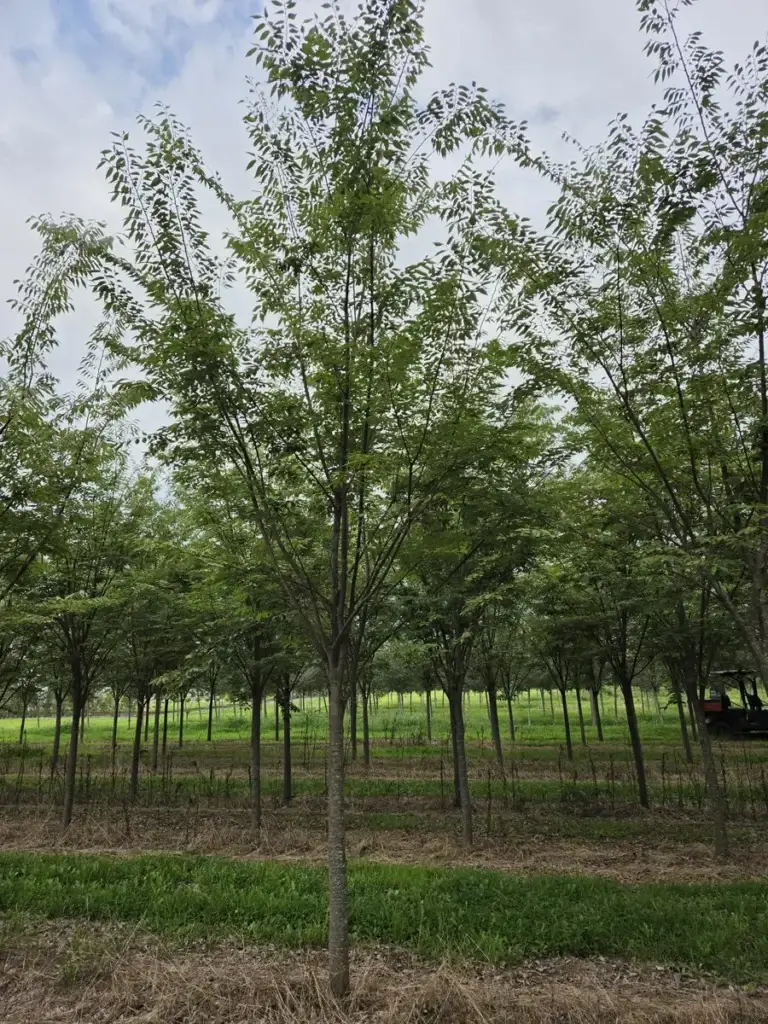
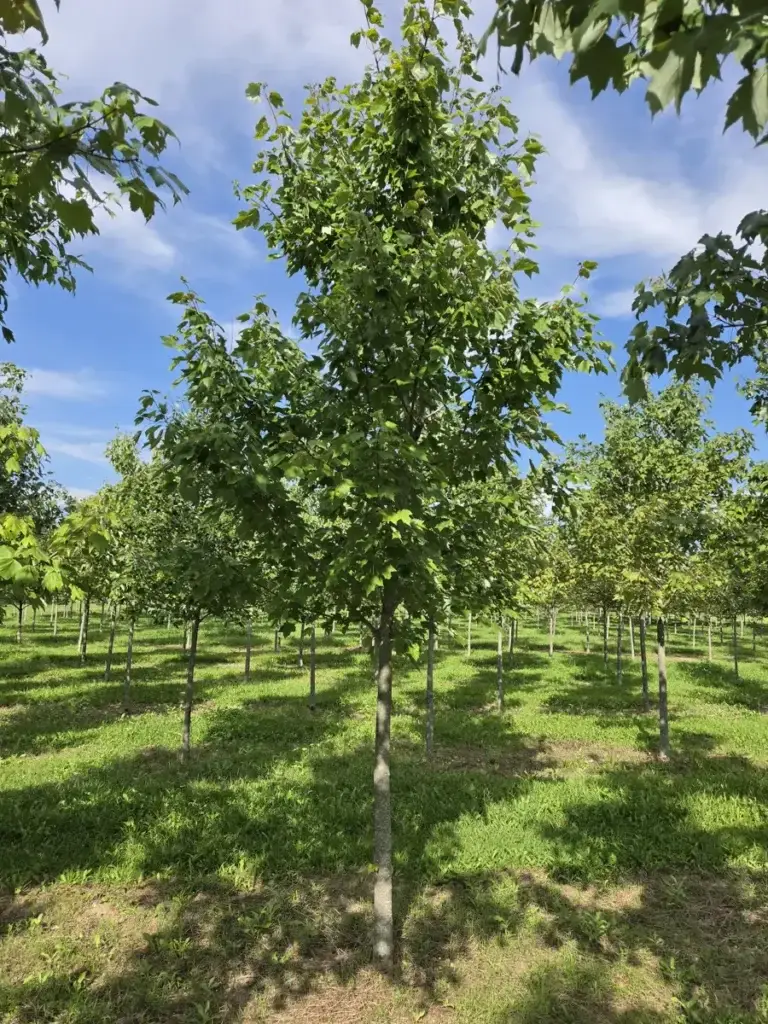
| Botanical name | Gleditsia triacanthos var. inermis (thornless; Shademaster and Skyline cultivars) |
| Category | Large shade tree, native to the eastern United States |
| USDA hardiness zones | 4 to 9 (all of New Jersey) |
| Sun exposure | Full sun |
| Growth rate | Fast: 24 inches or more per year |
| Mature size | 40 to 70 ft tall, 30 to 50 ft spread, open spreading canopy |
| Fall color | Clear yellow; small leaflets need no raking |
| Soil | Very adaptable; tolerates drought, salt, compaction, alkaline and poor soils |
| Sizes available | 1.5 in. to 3 in. caliper, balled and burlapped (confirm current stock) |
| Recommended uses | Street tree, parking lots, plazas, lawns where filtered shade is wanted, tough urban and commercial sites |
Why Contractors Choose Honey Locust
- Light, filtered shade lets lawn and groundcover grow right up to the trunk, unlike dense maples and oaks.
- Tiny leaflets disappear into turf in fall, so there is nothing to rake: a favorite for commercial and municipal maintenance budgets.
- Thornless and seedless cultivars (Shademaster, Skyline) mean no pods and no mess on sidewalks or parking lots.
- Exceptional tolerance of road salt, drought, heat and compacted soil, which is why it is on nearly every New Jersey street tree list.
- Fast growing and quick to establish after transplanting.
Growing Notes
Plant Honey Locust in full sun; it will not perform in shade. It adapts to almost any soil, including dry and alkaline sites, and once established needs little supplemental water. Space street and lawn trees 35 to 45 ft apart. Structural pruning in the first few years to establish a strong central leader pays off later, as the wood can be brittle in ice storms if the crown is left multi-stemmed. Watch for webworm and plant bug in some seasons; both are cosmetic and rarely require treatment. Shademaster has a more upright, uniform crown; Skyline is slightly more pyramidal. Both are thornless and nearly podless.
Frequently Asked Questions
Honey Locust is one of the fastest-growing shade trees available, adding 24 inches or more a year. A 2 in. caliper tree from our Cranbury, NJ farm will provide useful shade within three seasons.
Yes. We grow only thornless, nearly seedless cultivars such as Shademaster and Skyline, which are the standard for street, park and commercial plantings.
Yes. It tolerates road salt, compacted soil, drought and heat better than almost any other large shade tree, and its small leaflets do not clog storm drains. It appears on most New Jersey municipal approved street tree lists.
Yes. Honey Locust casts light, dappled shade, so turf and most groundcovers grow well beneath it. This is one of the main reasons it is chosen over maples and oaks for lawns and commercial grounds.
Yes. We grow Honey Locust on our farm in Cranbury, NJ and supply landscape contractors, garden centers and municipalities across New Jersey, New York, Pennsylvania and Connecticut. Send your quantities and calipers through the quote form and we will confirm availability and contractor pricing, with delivery available.