River Birch at a Glance
| Botanical name | Betula nigra (Heritage and Dura-Heat cultivars) |
| Category | Accent and specimen tree, native to New Jersey |
| USDA hardiness zones | 4 to 9 (all of New Jersey) |
| Sun exposure | Full sun to part shade |
| Growth rate | Fast: 24 to 36 inches per year |
| Mature size | 40 to 60 ft tall, 30 to 40 ft spread |
| Bark and fall color | Peeling cinnamon to cream bark; yellow fall foliage |
| Soil | Moist to wet, acidic soil; tolerates flooding and clay, dislikes alkaline soil |
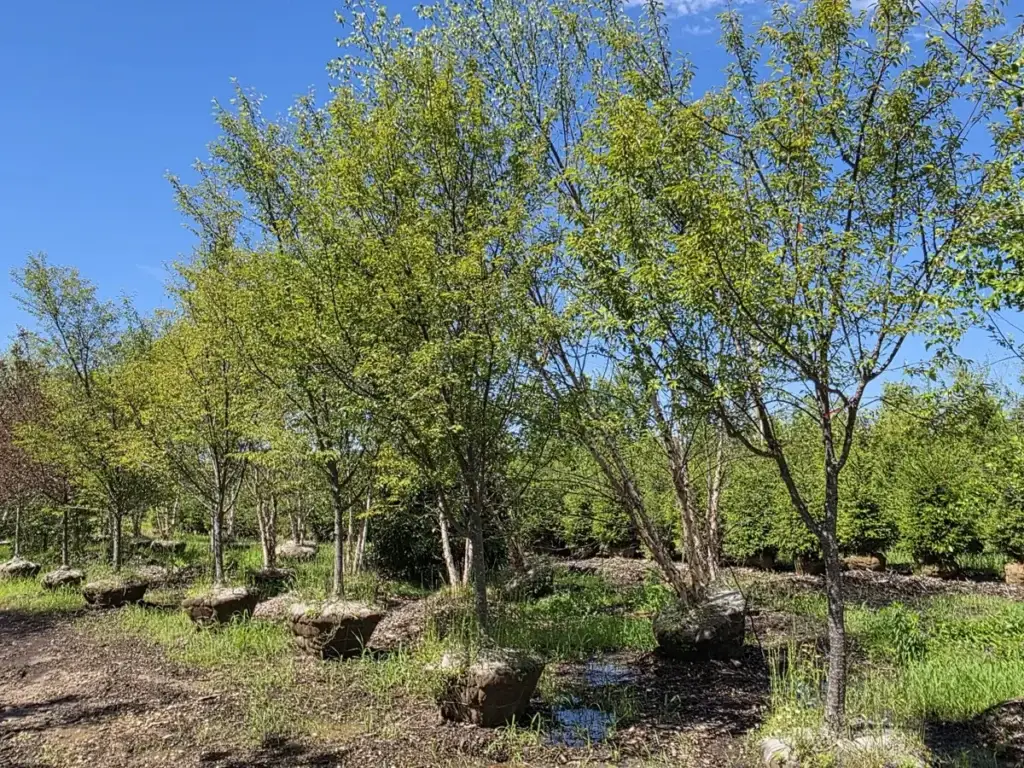
| Sizes available | Single-stem 1.5 in. to 3 in. caliper and multi-stem clumps 8 to 14 ft, balled and burlapped (confirm current stock) |
| Recommended uses | Wet sites, rain gardens, stormwater basins, pond and stream edges, front yard specimen, commercial entrances |
Why Contractors Choose River Birch
- Peeling, papery cinnamon bark gives year-round interest, which makes it the most popular ornamental birch for residential and commercial work.
- Native to New Jersey and resistant to the bronze birch borer that kills white-barked birches in our climate.
- Thrives in wet, poorly drained and periodically flooded ground where few other trees survive, so it is a go-to for stormwater basins and rain gardens.
- Fast growth means a multi-stem clump fills in and reads as a mature specimen within a few seasons.
- Available single-stem for street and lawn use or multi-stem for accent plantings, both in balled and burlapped sizes ready for delivery.
Growing Notes
Plant River Birch in full sun to part shade in moist, acidic soil. It will grow in ordinary lawn soil but needs regular water in dry spells; a stressed tree drops its inner leaves in late summer. Avoid alkaline sites near new concrete or heavily limed lawns, which cause yellowing foliage. Mulch generously to keep the roots cool and moist. Prune only in late summer or fall, never in spring when birches bleed sap heavily. Heritage is the standard cultivar with the lightest, most peeling bark and larger leaves; Dura-Heat holds its foliage better in heat and drought and stays somewhat smaller. Space single-stem trees 30 ft apart; multi-stem clumps work well as a single specimen or in groups of three.
Frequently Asked Questions
River Birch is one of the fastest-growing landscape trees in New Jersey, adding 24 to 36 inches a year in moist soil. A multi-stem clump planted at 10 ft will typically reach 20 ft within four or five seasons.
Yes. River Birch is native to stream banks and floodplains and handles wet, clay and periodically flooded ground better than almost any other landscape tree, which is why it is specified so often for stormwater basins and rain gardens in New Jersey.
Multi-stem clumps show off the peeling bark and are the usual choice for front yards, entrances and accent plantings. Single-stem trees suit street plantings, lawns and anywhere clearance under the canopy matters. We stock both in balled and burlapped sizes.
Yes. River Birch is the most borer-resistant birch available, unlike paper and European white birches, which are frequently killed by bronze birch borer in New Jersey. It is the birch we recommend for lasting plantings.
Yes. We grow River Birch on our farm in Cranbury, NJ and supply landscape contractors, garden centers and municipalities across New Jersey, New York, Pennsylvania and Connecticut. Send your quantities and sizes through the quote form and we will confirm availability and contractor pricing, with delivery available.