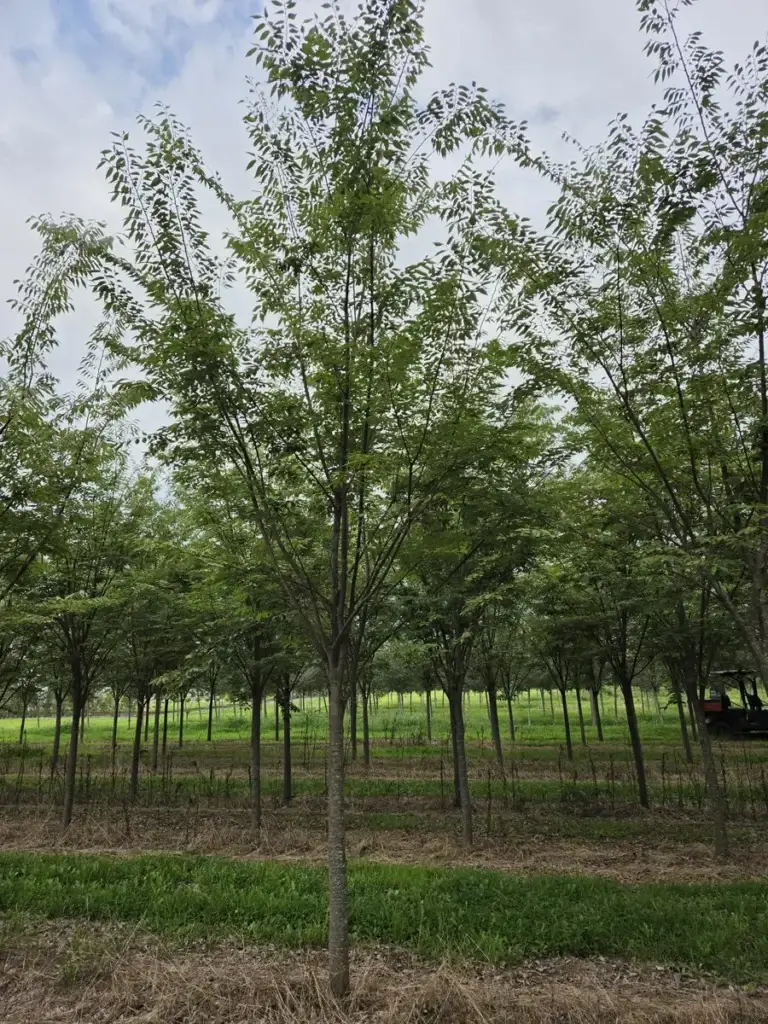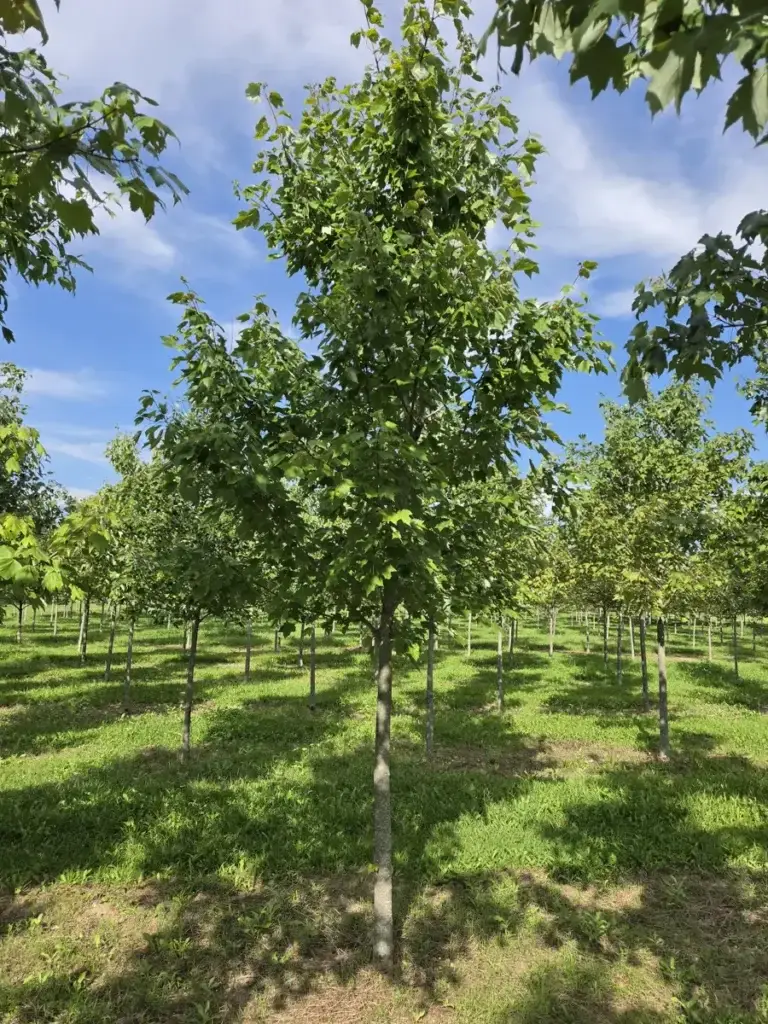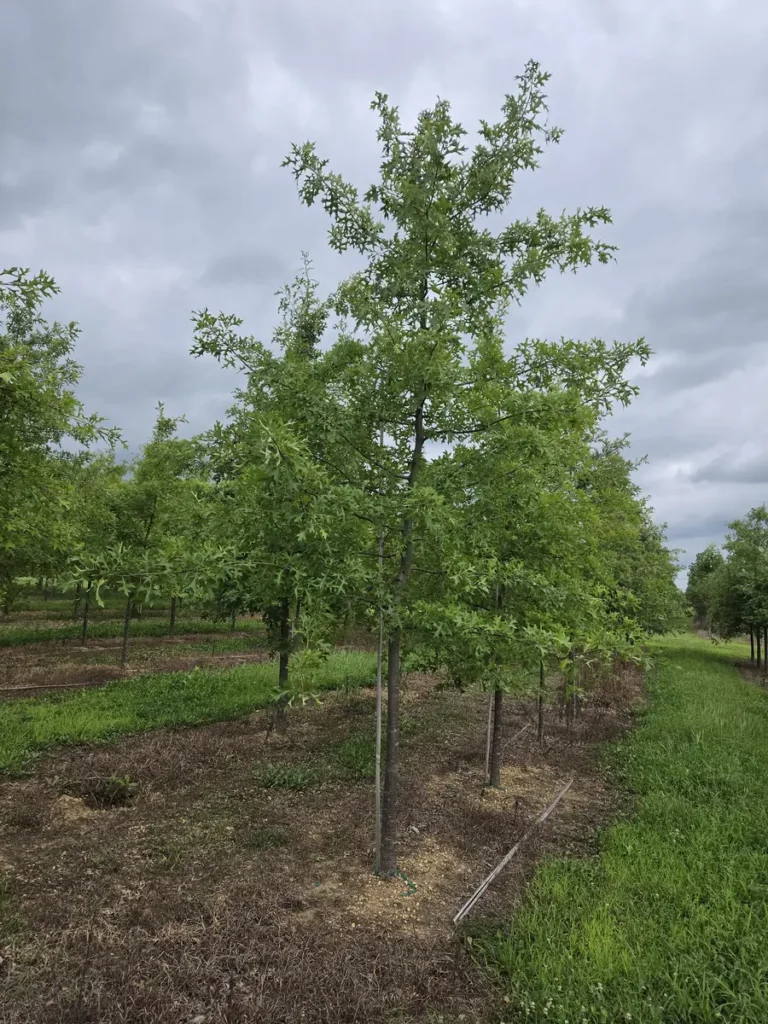
Pin Oak at a Glance
| Botanical name | Quercus palustris |
| Category | Large shade tree, native to New Jersey |
| USDA hardiness zones | 4 to 8 (all of New Jersey) |
| Sun exposure | Full sun |
| Growth rate | Fast: 24 inches or more per year |
| Mature size | 60 to 70 ft tall, 25 to 40 ft spread, strongly pyramidal with a central leader |
| Fall color | Scarlet to bronze; holds leaves into winter |
| Soil | Moist, acidic; tolerates wet and clay soil, dislikes alkaline soil |
| Sizes available | 1.5 in. to 3 in. caliper, balled and burlapped (confirm current stock) |
| Recommended uses | Street and lawn shade tree, parks, wet sites, native plantings, large residential and commercial properties |
Why Contractors Choose Pin Oak
- The fastest-growing oak, with real shade in a few seasons rather than decades.
- Native to New Jersey and a top wildlife tree, hosting hundreds of pollinator species and feeding birds and squirrels with acorns.
- Tolerates wet, clay and compacted soil better than most oaks, making it the oak for low sites and new developments.
- Distinctive pyramidal shape with a straight central leader; transplants easily for an oak.
- Scarlet fall color and leaves that hold through winter for texture.
Growing Notes
Plant Pin Oak in full sun in moist, acidic soil. Avoid alkaline soil and sites near new concrete, where chlorosis (yellowing leaves) develops. It tolerates periodic flooding and heavy clay. Space 35 to 45 ft apart. The lower branches sweep downward, so plan to remove the lowest limbs over time for clearance along streets and walks. Prune in winter. Water deeply through the first two seasons.
Frequently Asked Questions
Pin Oak is the fastest-growing oak, adding 24 inches or more a year. A 2 in. caliper tree from our Cranbury, NJ farm will provide shade within three to four seasons.
Yes. Pin Oak is native to floodplains and tolerates wet, clay and periodically flooded ground better than almost any other oak, which is why it is chosen for low sites.
Yellowing between the veins is usually iron chlorosis caused by alkaline soil, often near new concrete or heavily limed lawns. Plant in acidic soil and away from fresh masonry to avoid it.
Yes, with attention to clearance. Its drooping lower branches need to be pruned up over time. It is widely used on New Jersey streets and in parks for its speed and tolerance of poor soil.
Yes. We grow Pin Oak on our farm in Cranbury, NJ and supply landscape contractors, garden centers and municipalities across New Jersey, New York, Pennsylvania and Connecticut. Send your quantities and sizes through the quote form and we will confirm availability and contractor pricing, with delivery available.