
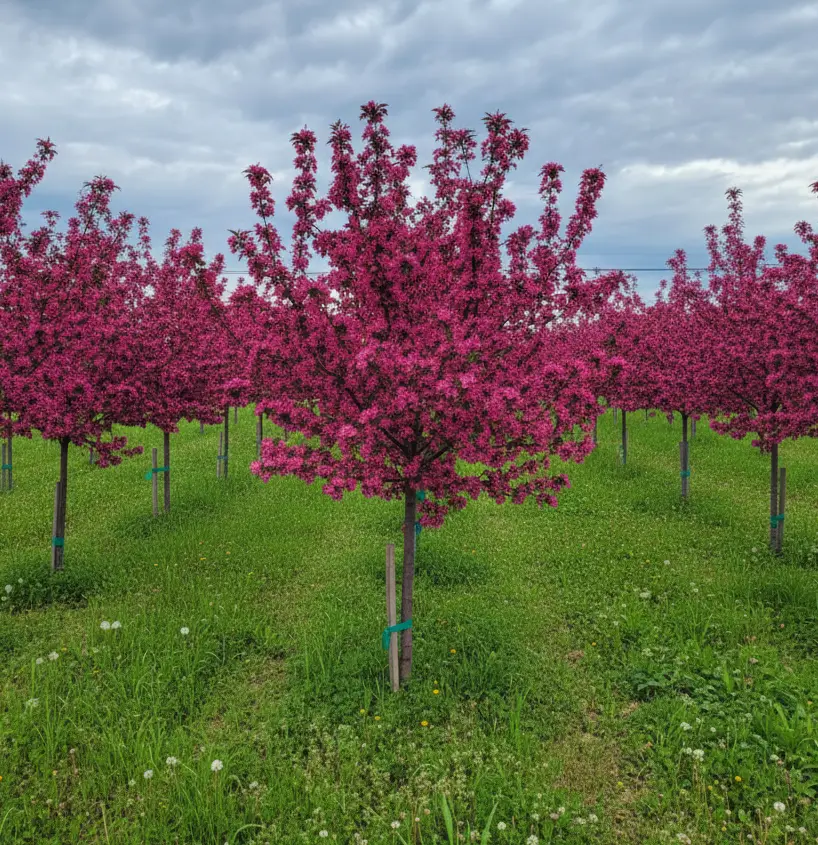
Flowering Crabapple at a Glance
| Botanical name | Malus ‘Prairifire’ and similar disease-resistant red-flowering cultivars |
| Category | Flowering and ornamental tree |
| USDA hardiness zones | 4 to 8 (all of New Jersey) |
| Sun exposure | Full sun |
| Growth rate | Medium: 12 to 24 inches per year |
| Mature size | 15 to 25 ft tall and wide, rounded to upright form |
| Flowers and fruit | Deep pink to reddish-purple flowers in late April to May; purple-tinged new leaves; small persistent dark red fruit into winter |
| Soil | Adaptable; prefers well-drained soil, tolerates clay |
| Sizes available | 1.5 in. to 2.5 in. caliper, balled and burlapped (confirm current stock) |
| Recommended uses | Front yard specimen, streetscapes under utility lines, commercial entrances, parks, wildlife plantings |
Why Contractors Choose Flowering Crabapple
- The heaviest spring bloom of any small tree, covered in flowers for two weeks each spring.
- Modern cultivars are resistant to scab, rust and fireblight, so no more late-summer leaf drop.
- Persistent small fruit feeds birds and adds winter color without the mess of large fruit.
- Tough and adaptable: handles clay, cold, heat and urban conditions.
- Stays under 25 ft, fits under power lines and in tight streetscapes.
Growing Notes
Plant crabapples in full sun for the best bloom and disease resistance. They adapt to most well-drained soils. Space 20 to 25 ft apart. Water through the first two seasons; established trees are drought tolerant. Prune in late winter to remove suckers, water sprouts and crossing branches; avoid summer pruning, which spreads fireblight. We stock disease-resistant cultivars selected for New Jersey, so the leaf spot and early defoliation of older crabapples are not an issue.
Frequently Asked Questions
Late April into early May in Central New Jersey, depending on the cultivar and the season. Bloom lasts about two weeks.
Yes. We grow modern cultivars selected for resistance to apple scab, rust and fireblight, which keeps foliage clean through summer.
Modern cultivars have small fruit, usually under half an inch, that persists on the tree into winter and is eaten by birds rather than dropping on pavement.
Most cultivars mature at 15 to 25 ft tall and wide, making them suitable under utility lines and in small front yards.
Yes. We grow Flowering Crabapple on our farm in Cranbury, NJ and supply landscape contractors, garden centers and municipalities across New Jersey, New York, Pennsylvania and Connecticut. Send your quantities and sizes through the quote form and we will confirm availability and contractor pricing, with delivery available.